Fabric vs Rigid Signage: Which Suits Your Venue?
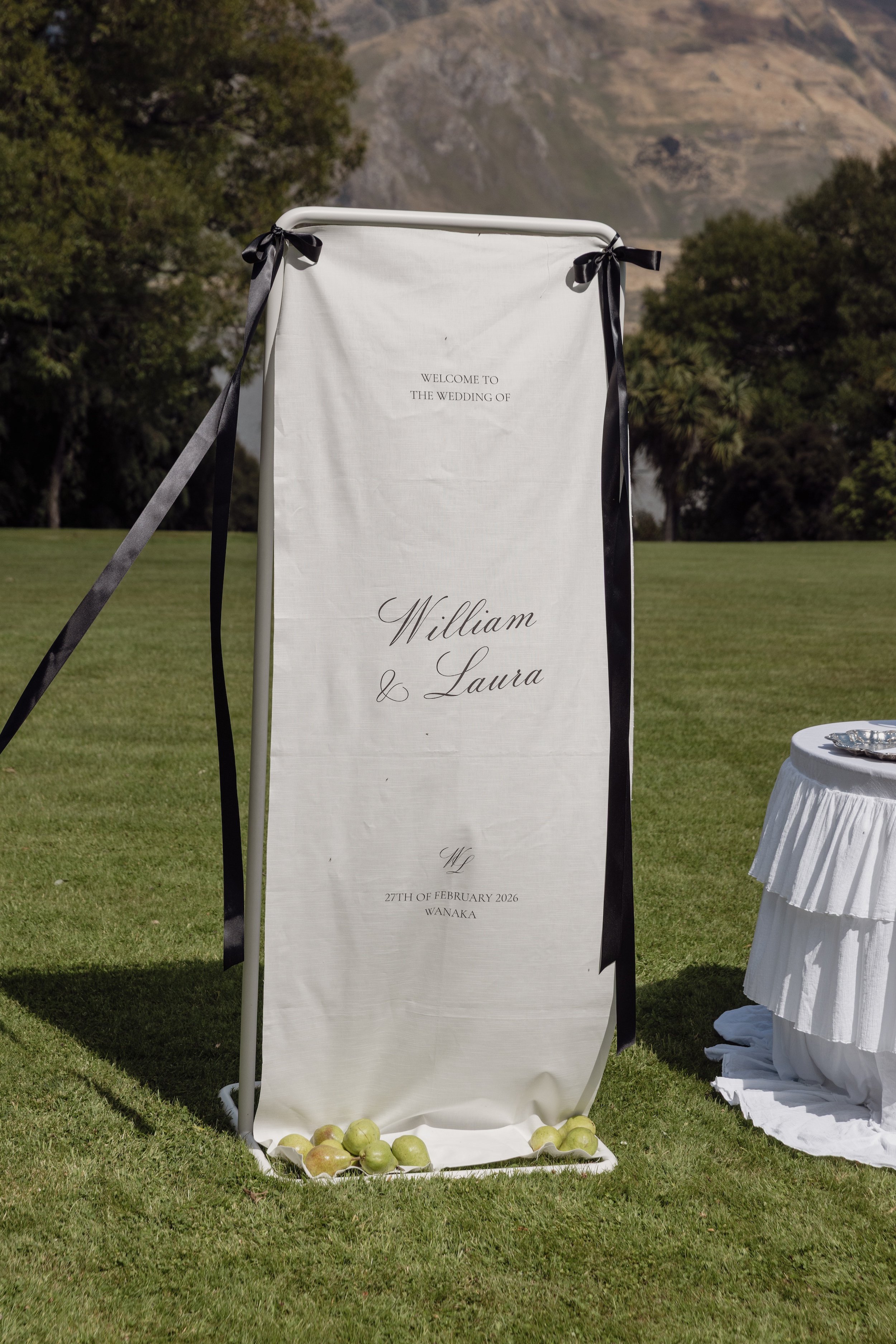
Laura & Will’s wedding in Wānaka photographed by Sapphire Studios
One of the first questions we ask a couple, before colour palette or typeface, is what their venue actually asks of their signage. It's a practical question with a genuinely stylistic answer, because fabric and rigid signage don't just perform differently outdoors, they look entirely different too. Here's how to choose.
The short answer: fabric signage suits sheltered, styled settings, gardens, vineyards, barns, marquees, and softly lit indoor spaces, where its drape and texture can do the work. Rigid signage suits exposed or unpredictable conditions, coastal sites, alpine venues, or all day outdoor celebrations, where a board needs to hold its line regardless of wind or weather. Many couples across Aotearoa use a considered mix of both.
What fabric signage brings to a wedding
Fabric signage, whether linen, cotton-blend or silk charmeuse, has a softness that printed board simply can't replicate. It catches light differently, moves gently in a breeze rather than fighting it, and photographs beautifully against greenery, stone or timber. It's also genuinely practical for travel: a fabric welcome sign or seating chart rolls down to almost nothing, which matters if you're planning a destination wedding or working with a tight venue changeover.
Where fabric signage performs best:
Garden, vineyard and estate weddings, where natural texture complements the setting rather than competing with it
Marquee and barn celebrations, sheltered from direct weather but still outdoors in feel
Indoor ceremonies and receptions, where there's no wind or rain to consider at all
Destination weddings, where packing light and steaming on arrival beats transporting a rigid board
Where rigid signage earns its place
Rigid signage, printed onto board, acrylic or foiled panels, is built for conditions fabric wasn't designed for. It holds a crisp edge in wind, survives a full day of setup exposed to sun, and doesn't need steaming or careful handling before it goes up. For venues where the weather is genuinely part of the day, rigid is often the more sensible choice, and there's no reason it can't be just as considered in its styling.
Where rigid signage performs best:
Exposed coastal venues, where wind is a near certainty
Alpine or high-country settings, where signage is often set up early and left through changeable weather
All-day outdoor events, where a sign needs to hold its position from morning styling shots through to evening
High-glare settings, where board can be finished to reduce reflection in a way loose fabric can't
Fabric vs rigid signage, at a glance
| Fabric signage | Rigid signage | |
|---|---|---|
| Best for | Sheltered, styled settings | Exposed or unpredictable conditions |
| Look and feel | Soft, textured, editorial | Crisp, structured, graphic |
| Wind performance | Best in still or lightly breezy conditions | Holds firm in wind |
| Travel and packing | Rolls flat, ideal for destination weddings | Needs careful transport, doesn't compress |
| Setup | Requires steaming or ironing before display | Ready to display straight away |
| Photography | Soft light, minimal glare | Can catch glare in direct sun depending on finish |
Can you mix the two?
Often, yes, and it tends to be the more practical choice. A couple might choose a linen welcome sign for their photographed arrival moment under cover, paired with a rigid seating chart or bar sign positioned somewhere more exposed for the rest of the day. We design both to feel like part of the same considered suite, so the material changes but the styling never feels disjointed.
Frequently asked questions
Is fabric signage suitable for outdoor New Zealand weddings? Yes, particularly for sheltered outdoor settings such as gardens, vineyards and marquees. Fabric performs well in still or lightly breezy conditions. For exposed coastal or alpine venues, or where all-day rain is likely, rigid signage on a weighted easel is the more reliable option.
Does fabric signage need special care before the day? Fabric signage typically needs a light steam or iron before display to remove fold lines from transport, which is one reason it travels so well for destination weddings.
How far in advance should I order my signage? We recommend confirming your signage alongside your wider stationery, ideally three to four months out, to allow time for design, proofing and any custom detailing.
Ready to talk through what your venue needs? Explore our fabric signage collection or get in touch and we'll help you decide what suits your day.