Wedding Welcome Sign Wording: Ideas for Modern Couples
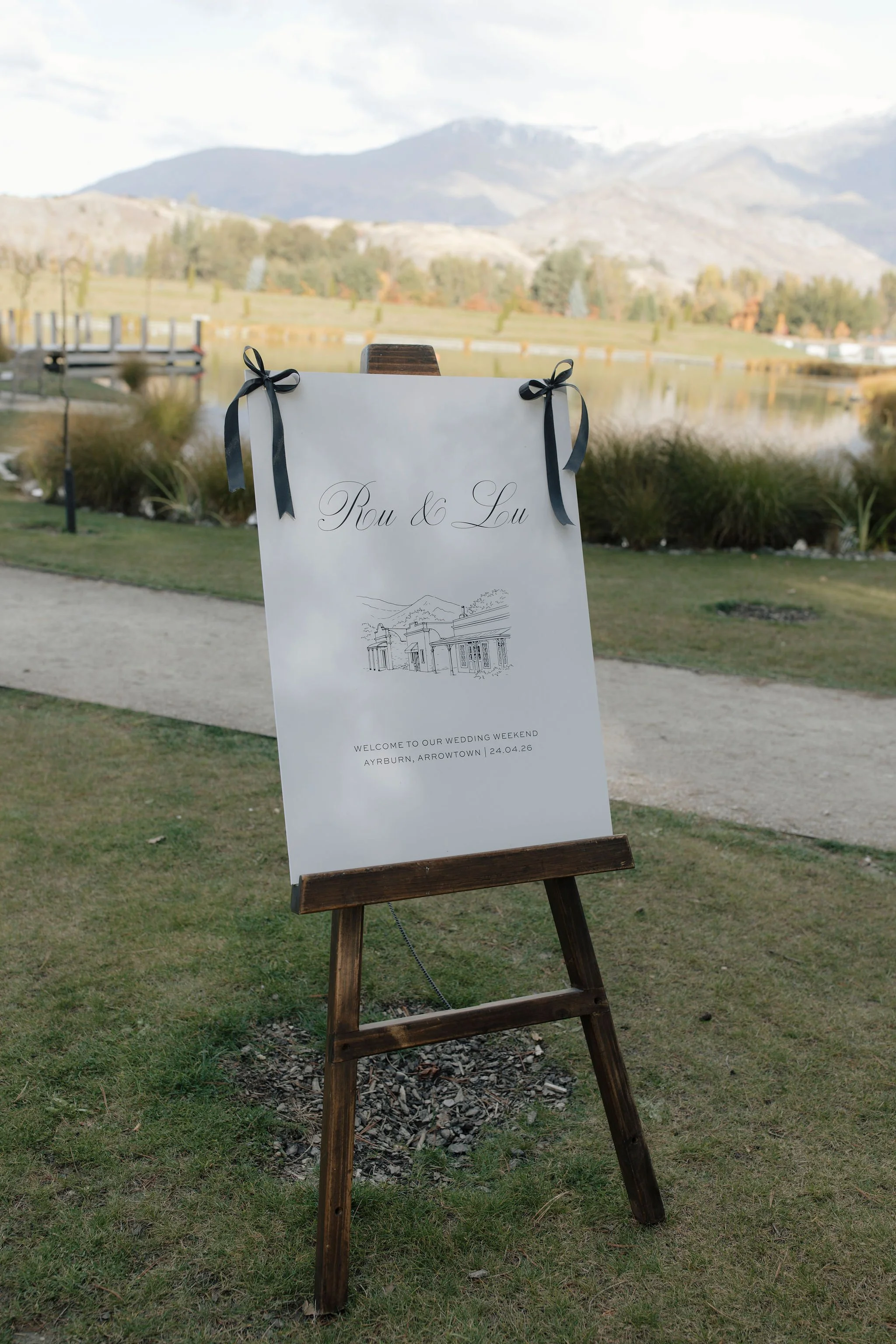
Lucy & Rupert’s wedding welcome sign photographed by Meg Elizabeth Studio
Your welcome sign is the first thing your guests read as they arrive, before the ceremony begins and before a single glass is poured. It sets the tone for everything that follows. The best wording is simple: your names, your date, a warm word of welcome, and just enough personality to feel like you.
Here's how to get it right, with wording ideas for every style of modern wedding.
What actually needs to be on a welcome sign
Technically, your names are the only essential. A greeting and the date are both optional, though they're popular for good reason, and it's entirely up to you whether you include one, both or neither.
Your names: the one true essential, in whichever order reads best to you as a couple
A greeting (optional but popular): "Welcome", "Welcome to our wedding", or your names alone can act as the greeting
The date (optional): written out in full for a more editorial feel, or numerically if you prefer a cleaner look
Some of the loveliest signs we design carry nothing more than two names, set beautifully. Everything else, from a greeting to a short line about the celebration, is a considered addition rather than a requirement. The most elegant signs tend to say less, not more.
Wording ideas by style
Modern and minimal
For couples drawn to clean lines and understated detail, less is genuinely more here. Let the typography and layout do the work.
Welcome to the wedding of [Name] & [Name]
[Name] & [Name], [Date]
Together at last. [Name] & [Name], [Date]
Welcome. We're so glad you're here.
Traditional and classic
For couples who want their sign to feel timeless rather than trend-led, a more formal structure still reads beautifully, particularly alongside classic stationery and a fuller wedding party.
Together with their families, [Name] and [Name] invite you to celebrate their marriage.
The marriage of [Name] and [Name], [Date].
Welcome to the wedding celebration of [Name] and [Name].
Mr and Mrs [Surname], welcome to our wedding.
Warm and editorial
For couples who want their wording to feel considered rather than sentimental. This suits fabric signage particularly well, where the softness of linen or silk charmeuse already carries warmth in the material itself.
Welcome. Today, we become [Name] & [Name].
A quiet celebration of two lives becoming one. All of you, here to see it.
Welcome, we're so glad you're here to celebrate [Name] and [Name].
With love, gratitude and good company. Welcome to our wedding.
Playful, done well
Playful doesn't have to mean corny. The trick is a light touch, one clever line rather than a string of puns.
Finally, [Name] & [Name] tie the knot
You're invited to the best day of our lives
Two people, one great love story, all of you here to celebrate it
With a nod to te reo Māori
For couples wanting to acknowledge Aotearoa in their wording, a simple, respectful greeting alongside the English can be a beautiful touch.
Nau mai, haere mai. Welcome to the wedding of [Name] & [Name].
If this is a direction you'd like to take, it's worth having the wording checked by a fluent speaker before it goes to print, to make sure it's used correctly and respectfully.
Getting the details right
A few small choices make a bigger difference than they seem:
Name order: there's no fixed rule anymore. Many modern couples list names alphabetically or simply in whichever order reads best aloud.
Date format: "the eighteenth of August, two thousand and twenty six" feels editorial and considered; "18.08.2026" feels clean and modern. Choose one to match the rest of your stationery suite, not the sign in isolation.
Keep functional wording separate: if you need to direct guests ("Please make your way to the garden for the ceremony"), consider a smaller second sign rather than crowding your welcome sign. It reads more intentionally, and photographs better too.
How much wording actually fits
This is where the practical meets the pretty. A welcome sign with a short greeting, your names and the date will always sit more elegantly than one trying to fit a paragraph. If you're drawn to a fuller design with a short verse or additional detail, fabric signage in a larger format gives you more room to work with than a standard rigid board, without losing that soft, editorial finish. It's worth deciding on your wording early, before your sign is designed, so the layout can be built around it rather than the other way round.
Frequently asked questions
Do I need to include "Mr and Mrs" or formal titles? No. Most modern welcome signs use first names only, which feels warmer and more personal. Formal titles are entirely optional and a matter of personal preference.
Should the date be on the welcome sign, or just the seating chart? It's common to include the date on the welcome sign as it's often the first and most photographed piece of signage on the day. If your design feels crowded, it's perfectly fine to save the date for your seating chart or other day-of pieces instead.
Can welcome sign wording match my invitation wording? Yes, and it's worth it. Carrying the same tone, and even the same key phrase, from your invitations through to your welcome sign creates a cohesive feel across the whole day rather than a collection of separate pieces.
What if we're having a small or intimate wedding? The same principles apply regardless of guest count. A simple, well-worded welcome sign works just as beautifully for twenty guests as it does for two hundred.
Ready to lock in your wedding stationery and signage?
Once your wording feels right, we'd love to help bring it to life. From fabric welcome signs to full stationery suites, every piece we create is designed and printed locally in Auckland, with a personal, one-to-one process from first enquiry through to final proof. Enquire with us below to start the conversation.